How to Use a Ambu bag, or Bag Valve Mask (BVM) During BLS: Step-by-Step Guide
Mastering Airway Management Skills for High-Quality CPR in Philadelphia

Introduction: Why Bag Valve Mask (BVM) Skills Matter in BLS
A BVM (Bag Valve Mask), also known as an Ambu bag, is a handheld device used to manually deliver breaths to a patient who is not breathing or breathing inadequately, providing positive-pressure ventilation in emergency situations.
In any cardiac or respiratory emergency, oxygen delivery is everything. While chest compressions are the foundation of Basic Life Support (BLS), effective ventilation can mean the difference between survival and poor neurological outcomes.
One of the most critical airway management tools used during resuscitation is the bag valve mask (BVM)—a device designed to provide positive-pressure ventilation when a patient cannot breathe adequately on their own.
Whether you're a college student preparing for healthcare training or a licensed provider completing your AHA BLS Certification in Philadelphia, understanding how to properly use a BVM is a core life-saving skill taught in every high-quality **American Heart Association training program.
What Is a Bag Valve Mask (BVM)?
A Bag Valve Mask (BVM) is a handheld resuscitation device used to deliver breaths to a patient who is not breathing or breathing inadequately.
Key Components:
- Self-inflating bag
- One-way valve
- Face mask
- Oxygen reservoir (optional)
These components work together to deliver controlled, positive-pressure breaths into the patient’s lungs.
When Should You Use a BVM During BLS?
Understanding when to use a BVM is just as important as knowing how.
Indications:
- Cardiac arrest (during CPR)
- Respiratory arrest
- Inadequate breathing (agonal respirations)
- Opioid overdose or airway compromise
In the BLS Provider Certification courses, students are taught that BVM use is preferred when two trained rescuers are available, due to the complexity of maintaining a proper seal.
BVM vs Pocket Mask: What’s the Difference?
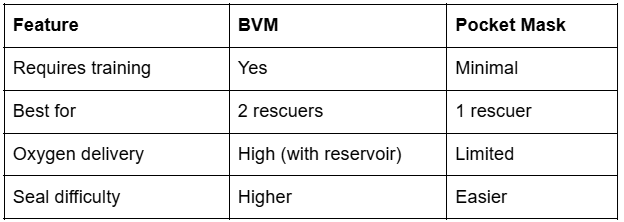
👉 In a First Aid CPR Course in Philadelphia, beginners typically start with pocket masks before advancing to BVM techniques.
Steps To Use the Bag Valve Mask
Step 1: Position the Patient and Open the Airway
Before touching the BVM, you must ensure the airway is open.
Techniques:
- Head tilt–chin lift (standard)
- Jaw thrust (if spinal injury suspected)
Failure to open the airway properly will result in:
- No chest rise
- Air entering the stomach instead of lungs
This is one of the most common mistakes seen during AHA BLS Certification training.
Step 2: Proper Mask Placement
Correct mask placement is critical for creating a seal.
How to Position the Mask:
- Place the narrow end over the bridge of the nose
- Cover both the nose and mouth completely
- Avoid gaps between mask and face
Even a small leak can significantly reduce ventilation effectiveness.

Step 3: Master the E-C Clamp Technique
This is the core skill of BVM ventilation.
Hand Position:
- Thumb + index finger form a “C” on the mask
Remaining three fingers form an “E” lifting the jaw
Why It Matters:
- Maintains airway patency
- Creates a tight seal
- Prevents air leakage
In every
BLS Provider Certification class in Willow Grove, this technique is practiced repeatedly because it directly impacts patient survival and is a critical skill to earn your American Heart Association.
Step 4: Deliver the Breath Correctly
This is where many people go wrong.
Proper Ventilation:
- Deliver breath over 1 second
- Watch for visible chest rise
- Avoid excessive force
Target Volume:
- Approximately 500–600 mL
- Enough to make the chest rise—not overinflate
Over-ventilation can:
- Cause gastric inflation
- Increase risk of aspiration
- Reduce cardiac output
Step 5: Coordinate With Chest Compressions
During CPR, timing is everything.
2-Rescuer BLS:
- Ratio: 30 compressions : 2 breaths
- Pause compressions briefly to ventilate
Advanced Providers (ACLS context):
Continuous compressions with asynchronous ventilation
These coordination skills are emphasized during AHA ACLS Renewal courses near Philadelphia.
Step 6: Use Two-Rescuer Technique (Preferred Method)

This is the gold standard for BVM ventilation.
Roles:
Rescuer 1:
- Maintains mask seal
- Performs E-C clamp with two hands
Rescuer 2:
- Squeezes the bag
- Monitors chest rise
Why the Two-Rescuer Technique is Better:
- Stronger seal
- More consistent ventilation
- Less fatigue
This is why professional responders and healthcare providers rely on team-based airway management.
Step 7: Monitor Effectiveness
You should always evaluate whether your ventilation is working.
Signs of Effective Ventilation:
- Visible chest rise
- Improved skin color
- Oxygen saturation improving (if monitored)
Signs of Failure:
- No chest rise
- Air leakage
- Abdominal distension
In advanced settings, tools like capnography (ETCO₂ monitoring) are used to confirm effectiveness.
Common Mistakes When Using a BVM
❌ Poor Mask Seal
❌ Not Opening Airway Properly
❌ Ventilating Too Fast
❌ Using Too Much Force
❌ Trying BVM Alone Without Training
These are frequently corrected during hands-on training at Willow Grove CPR.
How BVM Skills Are Taught in BLS Training
At Willow Grove CPR, an official American Heart Association Training Site, students learn:
- Hands-on BVM practice
- Realistic emergency scenarios
- Team-based resuscitation
- Instructor feedback
This ensures you don’t just know the skill. The course ensures that you can perform it under pressure.
Who Needs to Learn BVM Ventilation?
College Students
- Pre-med, nursing, EMT programs
- Campus safety roles
Healthcare Professionals
- Nurses
- Medical assistants
- EMTs and paramedics
Community Responders
- Coaches
- Teachers
- Security personnel
Why Proper Training Matters
You cannot learn BVM skills effectively from reading alone.
Hands-on practice is essential because:
- Seal technique requires muscle memory
- Timing must be practiced
- Real scenarios are unpredictable
This is why enrolling in a First Aid CPR Course in Willow Grove near Philadelphia is critical.
Ambu bag, or Bag Valve Mask (BVM) Training in Philadelphia
If you're searching for:
- AHA BLS Certification Philadelphia
- BLS Provider Certification Willow Grove PA
- CPR classes near Philadelphia
Choosing a trusted training provider matters.
Willow Grove CPR stands out by offering:
- Certified AHA instructors
- Flexible scheduling
- Hands-on, skill-focused training
- Convenient location near Philadelphia
Frequently Asked Questions (FAQ)
Do I need BVM skills for BLS certification?
Yes. BVM ventilation is a core skill in professional-level BLS training.
Can one person use a BVM?
Yes, but it’s difficult. A pocket mask is preferred for single rescuers.
How fast should I squeeze the bag?
Over 1 second per breath, just enough for chest rise.
Is BVM used in ACLS?
Yes. It is essential in airway management during AHA ACLS Renewal training.
Conclusion: Mastering BVM Can Save Lives
The ability to properly use a Bag Valve Mask (BVM) is one of the most valuable skills you can learn in emergency care.
It requires:
- Proper technique
- Practice
- Real-world application
Whether you're a student or healthcare professional, mastering this skill through AHA BLS Certification in Philadelphia or the American Heart Association ACLS Provider Certification Course ensures you're prepared when seconds matter most.
Ready to learn hands-on BVM skills?
Train with Willow Grove CPR the official American Heart Association Training Site serving the Philadelphia region.
Enroll today in:
Gain the confidence to act when it matters most.